Riding Through Savannah, Georgia's History with Old Town Trolley Tours: Trolley Stops, River Street, Riverboats, and a Beautifully Complicated Southern City

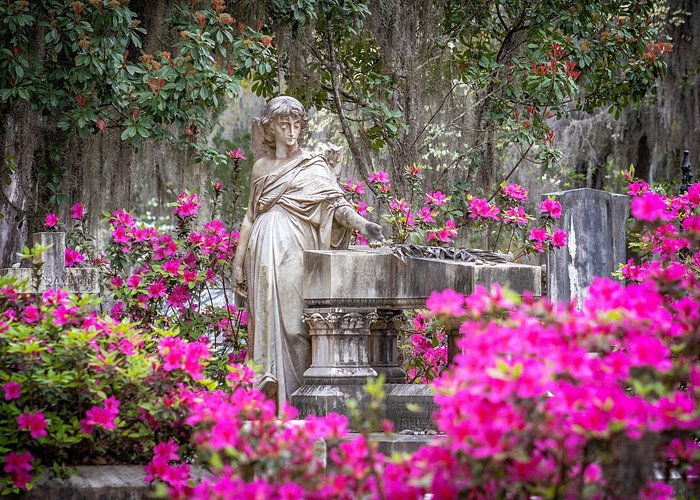
Take a journey with us through Savannah, Georgia and Old Town Trolley Tours exploring historic trolley stops, famous squares, River Street, the Savannah River, riverboat cruises, architecture, local legends, and the complicated history behind one of America’s most beautiful cities.
We visited Savannah last week, and the city immediately felt like one enormous outdoor history book... except this history book has Spanish moss, cocktails, pralines, uneven sidewalks, ghost stories, and horse-drawn carriages occasionally holding up traffic.
Savannah is elegant without trying too hard, mysterious without needing dramatic background music, and historic in a way that makes you realize nearly every attractive building has witnessed something fascinating, tragic, inspiring, or deeply uncomfortable.
Taking the trolley with Old Town Trolley Tours gave us useful details to explore the city. Instead of wandering in circles and pretending we knew where we were (like I normally do), we could hop off near major landmarks, explore, and eventually climb back aboard with bags and slightly more historical knowledge.
Old Town Trolley Tours currently advertises a 90-minute narrated loop with hop-on, hop-off access at 16 Savannah stops. The route travels through areas including the Historic District, Victorian District, River Street, Bay Street, Ellis Square, and City Market. That makes the trolley both a tour and a practical survival strategy, especially when Savannah’s heat begins treating your clothing like a personal moisture-collection project.
The narration introduces more than 100 points of interest, but the real advantage is flexibility: you can stay aboard for the complete overview or get off whenever a square, museum, church, restaurant, candy shop, or suspiciously inviting bench catches your attention.

The first trolley stop, Old Savannah Distillery, is near the western edge of the Historic District, where Savannah’s story feels more industrial and commercial than the postcard-perfect squares farther east. This part of town developed around transportation, warehouses, railroads, trades, and the constant movement of goods through a port city.
Savannah has never survived on good looks alone. The city’s economy depended on labor, shipping, agriculture, rail connections, and businesses that transformed raw products into things people could sell, drink, export, or argue about. Beginning the tour near a distillery is also wonderfully appropriate because Savannah has always maintained a close and apparently heartfelt relationship with hospitality.
Here, “Southern hospitality” can mean a friendly greeting, a long story, and possibly a beverage strong enough to make you forget how much you paid for parking.

Franklin Square was laid out in 1790 and named for Benjamin Franklin, but its most important feature today is the monument honoring the Chasseurs-Volontaires de Saint-Domingue. These free men of color from what is now Haiti fought alongside American and French forces during the 1779 Siege of Savannah.
Their presence connects Savannah to the American Revolution, Caribbean history, French colonial history, and Haiti’s eventual struggle for independence. It's an excellent example of why the city’s squares deserve more than a quick photograph. A person can stand in one small green space and encounter several international stories at once.
Naturally, Savannah places all this history beneath shady trees, surrounded by attractive buildings, while traffic calmly circles the square as though none of this is extraordinary.

The Juliette Gordon Low Birthplace Museum preserves the childhood home of the Savannah native who founded Girl Scouts of the USA in 1912. Low was born into a prominent family, but her legacy extends well beyond wealth and social position.
She created an organization that encouraged girls to develop practical skills, leadership, independence, outdoor knowledge, public service, and confidence at a time when society was not exactly handing young women a megaphone and asking for their strategic plans. The museum places her life within the Progressive Era and the broader history of women in the United States.
Even visitors who were never Girl Scouts can appreciate how an idea that began in Savannah grew into a national movement. Cookies eventually became part of the story, of course, proving that leadership and baked goods are a nearly unstoppable combination.

Madison Square was named for James Madison and is associated with one of Savannah’s best-known Revolutionary War figures, Sergeant William Jasper. Jasper became famous for rescuing and raising a fallen flag during the 1776 Battle of Sullivan’s Island near Charleston. He later died from wounds received during the unsuccessful 1779 Siege of Savannah.
The square contains a monument honoring him, while the surrounding area includes striking architecture such as the Green-Meldrim House. That house later served as General William T. Sherman’s headquarters after Union forces captured Savannah during the Civil War.
Savannah loves historical layering... one square can pull you from the Revolution into the Civil War before you have finished your coffee.
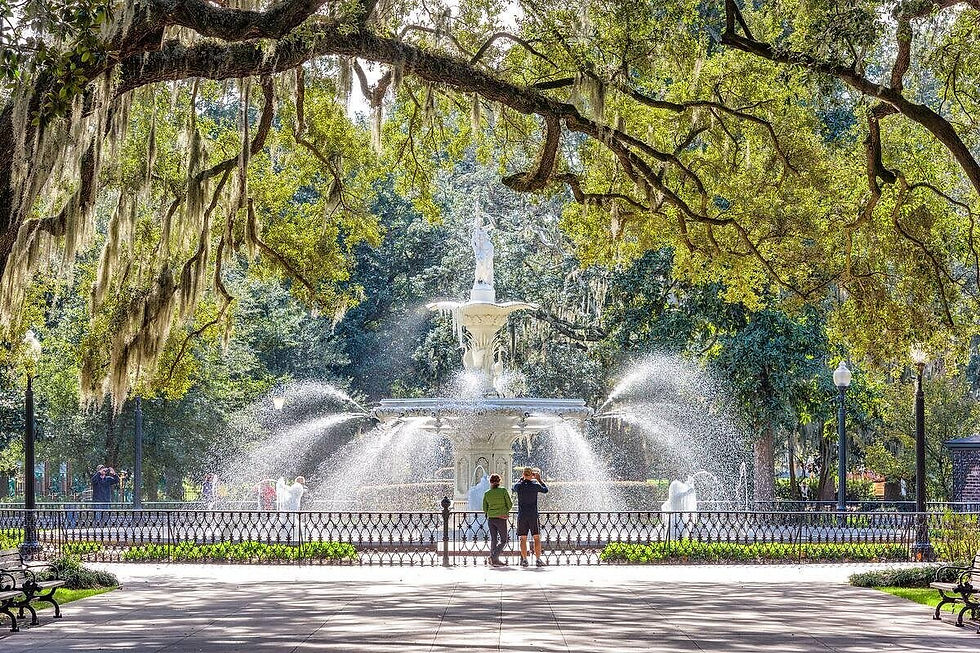
Forsyth Park occupies roughly 30 acres and functions as Savannah’s enormous communal front yard. Its famous fountain was installed in 1858 and remains one of the most recognizable images in the city.
The fountain’s design was selected from a catalog rather than created uniquely for Savannah, which feels slightly less romantic but also extremely relatable. Even nineteenth-century city planners apparently understood the appeal of ordering something attractive and having it delivered.
Beyond the fountain, Forsyth Park has hosted military exercises, public gatherings, festivals, concerts, protests, picnics, games, weddings, and countless slow walks beneath the trees. It's beautiful, but it is not merely decorative. Like Savannah’s smaller squares, the park is part of the city’s social structure—a place where public life happens instead of being pushed entirely indoors.

Taylor Square was known for generations as Calhoun Square, honoring South Carolina politician John C. Calhoun, an outspoken defender of slavery. In 2023, Savannah officials removed the Calhoun name, and the square was later named Taylor Square in honor of Susie King Taylor.
Born into slavery in Georgia in 1848, Taylor learned to read despite laws and customs designed to prevent Black education. During the Civil War, she served with the First South Carolina Volunteers, one of the earliest Black regiments in the Union Army, working as a nurse, teacher, laundress, and cook. She later published a memoir describing her wartime experiences.
Renaming the square did not erase history; it widened the story by asking whose life Savannah chooses to honor in its most visible public spaces. The debate also demonstrated that history is not a dusty object sitting safely on a shelf. It remains active, contested, personal, and occasionally capable of starting a very long city council meeting.

The Ralph Mark Gilbert Civil Rights Museum tells the story of Savannah’s Civil Rights Movement and is named for the pastor and activist often called the father of Savannah’s modern civil rights movement. The museum occupies a building that once housed the Wage Earners Savings and Loan Bank, an important Black financial institution.
Exhibits examine segregation, protest, economic resistance, legal challenges, community organizing, and the local leaders who fought discriminatory systems. Savannah’s movement included sit-ins, boycotts, voter registration efforts, and sustained organizing by students, clergy members, businesspeople, and neighborhood residents. This stop matters because beautiful architecture can make visitors overly nostalgic.
Remember that the “good old days” were not equally good for everyone, and that social progress usually comes from ordinary people deciding they have tolerated enough nonsense.

The Savannah Visitors Center is located in the former Central of Georgia Railway passenger station, connecting modern tourism with the city’s transportation history. Railroads helped make Savannah a major regional center by linking the port to inland farms, towns, industries, and markets.
Cotton, passengers, mail, manufactured goods, and military supplies traveled through the city’s rail network. The surrounding complex now includes the Savannah History Museum, where visitors can learn about the city from its colonial founding through later wars, industries, cultural movements, and famous residents.
It's the sort of place where one enters intending to collect a brochure and emerges an hour later discussing locomotives, Revolutionary War battles, and whether the gift shop sells a magnet shaped like Georgia.

The trolley welcome area near West Boundary Street provides access to the tour, but historically the western side of downtown also offers a reminder that cities are built through infrastructure, labor, commerce, and transportation—not merely by arranging mansions around photogenic parks. Warehouses, rail facilities, workshops, and commercial buildings supported Savannah’s port economy.
From here, the trolley carries visitors into the city’s more famous districts, performing the useful trick of turning urban geography into a chronological story. It also provides shade, seating, and the comforting knowledge that someone else is responsible for navigating the one-way streets.

Savannah’s City Market traces its history to the eighteenth century, when public markets were essential places for residents to purchase food and household goods. The original market spaces changed over time, and the present-day City Market is a restored commercial and entertainment district filled with shops, galleries, restaurants, music, and nightlife.
It's historical, although not in the silent-museum sense. People are eating, drinking, shopping, listening to musicians, carrying souvenir bags, and debating whether they need another piece of local art.
The market reflects Savannah’s talent for adapting old commercial spaces to modern tourism without completely draining them of character. This is also where a carefully planned historical itinerary can be ambushed by ice cream.

Christ Church has roots stretching back to the founding of the Georgia colony. Early services were connected to the Anglican Church, and the congregation is associated with figures such as John Wesley, who served in Savannah before becoming one of the founders of Methodism.
The present church building reflects later reconstruction and architectural changes, but the congregation’s long history ties it to Savannah’s colonial development. Religion influenced education, charitable work, politics, social customs, and relationships among different groups in the city.
Of course, Savannah’s religious history is no simpler than the rest of its past. The city contained devotion and hypocrisy, charity and exclusion, spiritual idealism and economic self-interest—often occupying the same block.

River Street is one of Savannah’s liveliest areas, but its attractive storefronts and cobblestone ramps sit within a history built around trade, forced labor, shipping, and global commerce. The Georgia colony was established along this waterfront in 1733, and the original Port of Savannah developed here.
By the middle of the nineteenth century, Savannah had become one of the world’s leading cotton-exporting cities. Many of the four- and five-story buildings now containing restaurants, bars, hotels, and shops were originally cotton warehouses. Cotton enriched merchants, exporters, brokers, shipowners, and investors, but the industry depended on the labor and suffering of enslaved people across the South.
River Street should therefore be enjoyed, photographed, and explored—but not romanticized so completely that the human cost disappears behind the brickwork.

Between Bay Street and River Street lies Factors Walk, a network of passages, bridges, retaining walls, and elevated walkways. Cotton factors were commercial agents who arranged sales, set prices, extended credit, and connected plantation owners with international markets.
Their offices overlooked the warehouses and wharves below, allowing business to move between ships, storage spaces, and counting rooms. The dramatic change in elevation between downtown Savannah and the riverfront created the unusual multi-level landscape visitors see today.
Walking here can feel like exploring the backstage corridors of the city. It can also feel like an orthopedic examination, because old ramps, stairs, bricks, and cobblestones insist that you watch every step.

Many stones used along the waterfront arrived as ballast aboard sailing ships. Vessels carried heavy rock to improve stability, then unloaded it when taking on cargo in Savannah. The discarded stones came from locations including Spain, France, Canada, Madeira, and the British Isles and were reused in streets, ramps, walls, and construction projects.
In other words, some of River Street’s most famous stones crossed an ocean before tourists began tripping over them while looking at their phones. Savannah’s waterfront quite literally contains pieces of the international trade network that shaped the city.

River Street Market Place continues the waterfront’s modern identity as a shopping and entertainment district. Today’s visitors find souvenirs, crafts, food, gifts, and river views where warehouses and commercial operations once dominated. The transformation did not happen automatically.
As port activity shifted upriver and the last cotton office on the waterfront closed in 1956, many old buildings became underused or abandoned. During the 1970s, redevelopment converted large sections of warehouse space into shops, restaurants, bars, and galleries. A new waterfront plaza opened in 1977, helping revive downtown Savannah and establishing River Street as a major visitor destination.
The result is a successful example of adaptive reuse, although the phrase “adaptive reuse” sounds far less exciting than “someone put a candy shop in the old cotton warehouse.”

Florence Martus became known as Savannah’s “Waving Girl” because she reportedly greeted ships entering and leaving the harbor for decades, waving a cloth or handkerchief by day and a lantern by night. She lived near the river with her brother, who served as a lighthouse keeper.
The romantic version of the story claims she was waiting for a lost love to return from sea, although that explanation appears to be legend rather than firmly documented fact. Her statue depicts her waving toward the river with her collie nearby. Whether she was awaiting someone, greeting sailors, or simply maintaining the most demanding neighborhood welcome committee in American history, Martus became a symbol of Savannah’s relationship with the ships passing its waterfront.

The Isaiah Davenport House is important not only as an example of Federal-style architecture but also because its preservation helped launch Savannah’s modern historic-preservation movement. Built in the early nineteenth century by master builder Isaiah Davenport, the house faced demolition in the 1950s.
A group of local women organized to save it, eventually forming the Historic Savannah Foundation. Their efforts helped change public attitudes toward old buildings at a time when demolition was often considered easier and more modern than restoration.
Without preservation campaigns like this one, Savannah might have replaced much of its historic character with parking lots, office blocks, and the kind of architecture that makes people say, “Well, at least it has air-conditioning.”

The Cathedral Basilica of St. John the Baptist is one of Savannah’s most visually impressive landmarks, with soaring spires, stained glass, murals, and an interior designed to make visitors instinctively lower their voices. The cathedral reflects the growth of Savannah’s Catholic community, which included large numbers of Irish immigrants arriving during the nineteenth century.
Irish workers contributed to the city’s railroads, canals, docks, construction projects, businesses, churches, and civic institutions. Their influence remains especially visible in Savannah’s famous St. Patrick’s Day traditions.
The current cathedral was dedicated in the nineteenth century, suffered severe fire damage in 1898, and was rebuilt. Like much of Savannah, it survived because people considered it worth reconstructing rather than replacing with something convenient and beige.
Savannah’s Historic District is organized around a system of squares that began with James Oglethorpe’s colonial plan in 1733. The original design grouped homes and civic lots around shared public spaces, creating neighborhoods known as wards. The squares could support gatherings, defense, public ceremonies, markets, memorials, and daily recreation.
Twenty-two historic squares remain today, each with its own monuments, landscaping, buildings, and stories. The plan encourages walking and provides regular pockets of shade, which is helpful because Savannah’s climate can turn a pleasant stroll into a negotiation with the sun. More importantly, the squares make history part of ordinary city life.
Monuments are not isolated behind gates... they stand where residents walk dogs, read books, eat lunch, and explain to tourists that, no, this particular bench is not the exact bench from Forrest Gump.

A riverboat cruise changes the way Savannah’s geography makes sense. From the water, visitors can see the bluff rising above River Street, the old warehouses, the bridges, modern port operations, Hutchinson Island, shipyards, and vessels moving through one of America’s important commercial waterways.
Savannah Riverboat Cruises was established in 1991, initially operating the River Queen and later adding larger vessels. Its boats are styled after traditional paddlewheel riverboats, combining sightseeing with dining, entertainment, and narration.
The cruises depart near the historic waterfront and travel through sections of the modern port before passing landmarks associated with the city’s maritime history.
The modern Savannah riverboat experience is partly historical interpretation and partly theater. The vessels evoke nineteenth-century paddlewheel travel, but the river surrounding them remains an active commercial channel.
Huge cargo ships may pass nearby, producing one of the trip’s best visual contrasts: a nostalgic riverboat carrying visitors with cameras while an enormous container vessel demonstrates exactly how global trade looks in the twenty-first century. The river transported rice, timber, cotton, people, military forces, immigrants, and manufactured goods throughout Savannah’s history.
It remains central to the region’s economy. The scenery is enjoyable, but the river is not merely scenery. It is the reason Savannah developed where it did.
Riverboat routes may provide views toward Old Fort Jackson, shipyards, Hutchinson Island, and other areas connected to Savannah’s maritime and military history. The river offered commercial opportunity, but it also created vulnerability.
Enemy ships and invading forces could approach through the waterway, making fortifications necessary. During the American Revolution, the War of 1812 era, and the Civil War, controlling access to Savannah and its port carried strategic importance.
Even the pleasant river breeze seems historically significant once you realize generations of soldiers, sailors, dockworkers, merchants, and pilots watched the same channel for very different reasons.
By evening, River Street changes personality. The historic buildings remain, but the atmosphere becomes louder, brighter, and more social. Restaurants fill, musicians perform, people wander between shops, and the river reflects lights from buildings and passing boats.
Savannah allows alcoholic drinks in approved open containers within designated parts of its Historic District, contributing to the city’s reputation as a relaxed destination for nightlife. This does not mean every visitor must spend the evening carrying a frozen beverage large enough to require its own trolley ticket. It simply means River Street offers several ways to experience the waterfront, from quiet sunset watching to a livelier night out.
Savannah is undeniably beautiful, but its history should not be reduced to mansions, fountains, debutantes, and ghost stories. The city was shaped by Native American history, European colonization, slavery, the cotton economy, revolution, war, immigration, segregation, civil-rights activism, preservation, tourism, and global trade.
Some people arrived seeking opportunity. Others were brought through violence and coercion. Some accumulated enormous wealth. Others organized to gain basic rights and recognition. The trolley route brings many of these stories close together, sometimes within a few minutes of one another. That closeness is what makes Savannah so compelling.
The city does not present a tidy historical narrative. It presents beauty and injustice, hospitality and exclusion, preservation and reinvention, all tangled together like Spanish moss in a live oak.
Our Savannah trip was entertaining, educational, occasionally sweaty, and filled with those moments when a casual sightseeing stop unexpectedly becomes a much larger history lesson. The trolley helped us understand how the squares, museums, churches, markets, neighborhoods, and waterfront connect.
River Street showed how the city turned an old commercial district into a modern destination while still carrying visible traces of the cotton trade and maritime economy. The riverboat placed everything into geographical perspective, reminding us that Savannah exists because of the river flowing beside it.
We arrived expecting architecture, food, and classic Southern charm. We found all three, but we also found a city whose past keeps interrupting the present—and honestly, that is what made the trip worth writing about.
Ready to discover more destinations, festivals, activities, and memorable travel experiences? Explore upcoming events and travel inspiration from Miami, Florida, and beyond with Dia'ani TV.
Stay tuned for updates and more in-depth coverage of your favorite celebrities and entertainment news! Create a free membership account with us today!
Dennis (Owner)


Comments