Gucci Fall/Winter 2026 Update: Demna’s Sexy New Era Has Officially Reached the Shopping Stage


Explore the latest Gucci Fall/Winter 2026 updates, from Demna’s body-conscious Primavera runway and Generation Gucci retail launch to reinvented handbags, glossy tailoring and the brand’s controversial use of AI.
Gucci’s New Era Is No Longer Just a Runway Theory
When Demna presented Gucci Primavera at Milan Fashion Week in February 2026, the usual fashion-industry analysis began immediately. Was it a Tom Ford revival? Was it old Gucci with new lighting? Was everyone about to start wearing glossy pinstriped suits and behaving suspiciously in hotel bars?
Several months later, the conversation has moved beyond runway interpretation. Demna’s Gucci is now entering stores and online shopping carts through Generation Gucci, an assortment of ready-to-wear, handbags, shoes and accessories available through the house’s official website. The aesthetic is no longer a stylish hypothesis. It has reached the far more serious stage where people must decide whether they love it enough to enter their credit-card information.
Gucci Primavera Introduced the Full Demna Vision
Gucci describes Primavera as the beginning of a new chapter and Demna’s first runway fashion show for the house. The collection brought together body-conscious clothing, polished outerwear, fluid tailoring, recognizable Gucci references and a beauty look inspired by the 1970s and 1990s.
The result was undeniably glamorous, although not in a polite, quietly wealthy, “my cashmere has never experienced public transportation” manner. This was sharper glamour: fitted dresses, smoky eyes, slick surfaces and silhouettes that appeared to have firm dinner reservations.
The collection drew from Gucci’s history without settling on one single period. There were echoes of Tom Ford’s provocative 1990s minimalism, traces of Milanese bourgeois elegance and occasional reminders of the playful character-building associated with Alessandro Michele. Demna effectively treated the Gucci archive like an extremely luxurious buffet. He sampled widely, but he did not pile everything onto one plate.
Generation Gucci Has Arrived Online
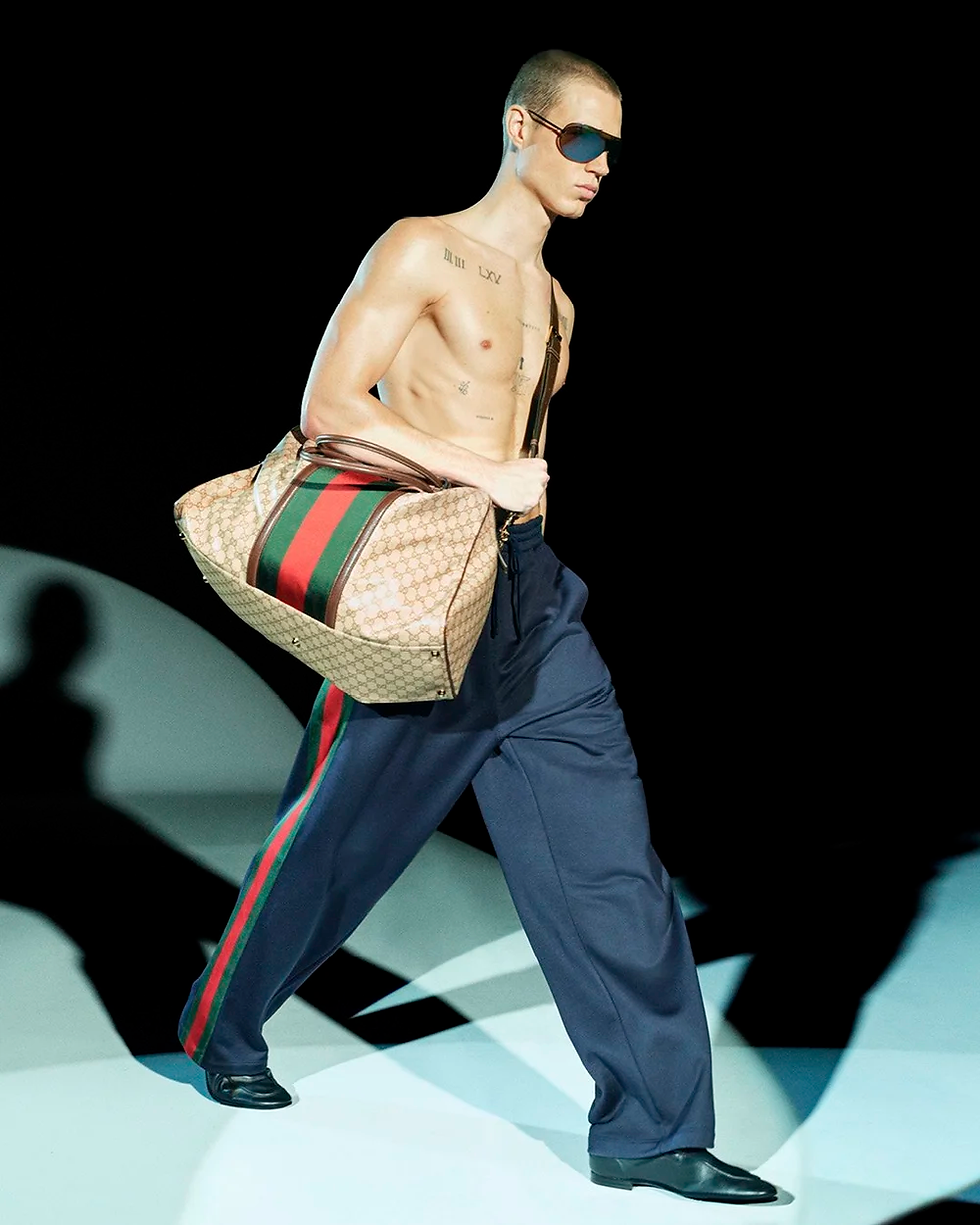
The clearest update is the official availability of Generation Gucci, which Gucci identifies as a new collection by Demna. The women’s selection includes dresses, tailoring, handbags, footwear and accessories, while the men’s offering extends across jackets, bags, shoes and additional wardrobe pieces.
This retail launch matters because a fashion house’s new creative direction does not truly become real when critics publish reviews. It becomes real when products appear beside prices, sizes and an “add to shopping bag” button.
Among the listed pieces are fine silk-faille separates, pinstriped wool tailoring, lightweight trousers and updated versions of established handbags. In one European Gucci storefront, examples included a silk-faille jacket, a coordinating long skirt, a pinstriped wool blazer and a medium Jackie Slim shoulder bag. Availability and pricing naturally vary by region, because luxury shopping apparently requires both money and geography.
The Clothes Are Sexy, but Not in an Overcomplicated Way
One of the most important elements of Demna’s Gucci is its relative directness. The clothes frequently follow the body rather than disguising it beneath architectural layers or conceptual styling. Slim dresses, fitted tops, narrow trousers and fluid evening pieces create a sensual wardrobe that does not require a 900-word museum label to explain itself.
The Associated Press described the runway as opening with clean, body-conscious designs before moving into slim tailoring and flowing dresses. Its review also noted that Demna appeared interested in pragmatism and emotional impact rather than making the collection feel aggressively intellectual.
In ordinary language: the clothes are supposed to make someone look excellent, not make nearby diners wonder whether the outfit represents a critique of late capitalism.
That simplicity may be commercially useful. Consumers can easily understand the appeal of a fitted black dress, a sleek coat or a fluid suit. These pieces may carry elaborate references, but they do not require advanced fashion archaeology to wear.
Tailoring Is Still One of the Collection’s Strongest Ideas
Gucci’s new tailoring combines polish with movement. Jackets are controlled but not stiff. Trousers are refined without feeling trapped in the executive conference room. Pinstripes and glossy finishes add visual drama to silhouettes that remain relatively familiar.
WWD characterized the Fall 2026 show as bringing new energy to Gucci and emphasized the sensual current running through the collection.
The best suits in this direction have the confidence of corporate tailoring without the emotional burden of actually being corporate. They say, “I understand quarterly results,” while quietly suggesting, “but I will not be staying for the entire meeting.”
For shoppers, the easiest interpretation is a strong Gucci blazer worn with a close-fitting top, narrow trousers or a simple skirt. A full matching suit creates the most dramatic version, but a single jacket can introduce the look without making every trip to lunch resemble an investor presentation.

The Jackie Slim Is Making a Serious Case for Itself
Handbags may become the most commercially powerful part of Demna’s Gucci. The official Generation Gucci selection prominently includes new bags alongside clothing and footwear, while current listings have featured the Jackie Slim and Dionysus styles.
The Jackie has always carried substantial Gucci history, but a slimmer, softer interpretation gives the bag a more contemporary attitude. It preserves enough recognizable design language to communicate heritage without looking as though it must remain untouched in a glass cabinet.
That balance is crucial. Luxury consumers often want an iconic bag, but they also want to place a phone inside it without feeling they have violated a conservation agreement.
The Dionysus provides a different proposition. Its recognizable hardware and stronger decorative identity appeal to shoppers who prefer their handbags to introduce themselves before they do. Together, the Jackie and Dionysus help Demna offer more than one version of Gucci: sleek and restrained on one side, unmistakably branded on the other.
Gucci Is Putting the Bag Back at the Center of the Outfit
Gucci has also reinforced its focus on handbags through the Beauty and the Bag campaign, starring NINGNING, Kate Moss and Emily Ratajkowski. The campaign examines the relationship between a person and the bag they carry, repeatedly positioning the handbag as the central element of the wardrobe.
This is not exactly shocking behavior from a luxury house. Gucci has discovered that people like handbags, in much the same way that restaurants have discovered people like dessert.
Still, the strategy makes sense for the current transition. A dramatic runway gown may generate press, but a recognizable bag often provides the more accessible entry point into a new creative era. Customers who are not ready for a body-skimming, floor-length Demna dress may be considerably more prepared for an updated shoulder bag.
A handbag also allows Gucci to preserve continuity. Creative directors change, silhouettes move in and out of fashion, and campaign aesthetics become more experimental. The Jackie, Bamboo and Dionysus provide familiar anchors through all of it.

The Beauty Look Is Not Pretending It Woke Up Like This
The Gucci Primavera beauty direction was designed as an accessory to each outfit. Gucci’s official description cites 1970s and 1990s references reworked through contoured complexions, smoky eyes and lip colors ranging from beige to deep red and black.
There is very little “barely there” about the effect. The face has arrived prepared. The cheekbones have a strategy. The eyeliner has reviewed the guest list.
This beauty direction supports the collection’s return to visible glamour. Instead of fading into the background, makeup helps construct each character. That approach aligns with Demna’s broader fascination with recognizable personalities and social archetypes. A Gucci look is not simply clothing placed on a body. It is a person who clearly has somewhere more interesting to be.
For shoppers seeking a realistic version, the formula is straightforward: luminous but structured skin, smoky eyes and a deliberate lip. There is no requirement to reproduce every element simultaneously unless the occasion involves cameras, velvet ropes or an ex who needs to see that you are doing exceptionally well.
Kate Moss Delivered the Runway’s Defining Moment
The finale became one of the most discussed images from the show when Kate Moss appeared in a plunging, glittering black gown that exposed a Gucci-branded thong. The moment recalled the provocative confidence associated with Tom Ford-era Gucci without being a direct copy of one particular archival look.
It was dramatic, unsubtle and precisely calibrated for the internet.
The look also communicated Demna’s intentions efficiently. This Gucci is aware of its history, comfortable with sex appeal and interested in moments that travel far beyond the runway audience. A discreet final dress might have pleased devoted minimalists. A supermodel in a nearly backless gown and branded underwear gave everyone else something to discuss before the show had even ended.
The Tom Ford Comparison Is Understandable—and Incomplete
The references to Tom Ford’s Gucci are impossible to ignore. The fitted silhouettes, dark glamour, exposed skin and glossy surfaces naturally recall the era that transformed Gucci into one of the defining luxury brands of the 1990s.
However, describing the entire collection as a Ford revival oversimplifies Demna’s approach. His Gucci also incorporates sociological character studies, intentionally familiar wardrobe pieces and touches of exaggerated styling associated with his earlier work. Reviews noted both the late-1990s mood and Demna’s effort to synthesize multiple versions of Gucci rather than reproduce a single historical period.
The better interpretation is that Demna has borrowed the confidence of Ford-era Gucci. He has not borrowed the entire wardrobe and forgotten to return it.
This distinction will become clearer as more collections arrive. A debut season inevitably relies on recognizable house codes because the designer must explain the new direction while reassuring customers that the logo on the door still means something. Later collections will reveal which historical references are foundational and which were introductory gestures.
Then Gucci Added AI and Everyone Became Calm and Reasonable
They did not, of course.
Ahead of Demna’s runway debut, Gucci used AI-generated imagery in connection with the Primavera promotion. The images produced immediate backlash online, with some critics describing them as cheap, artificial or inconsistent with a luxury house built around craftsmanship and human creativity.
Branding experts offered a more sympathetic explanation, suggesting that Gucci’s use of AI aligned with its history of provocation and cultural experimentation. From that perspective, the campaign was not necessarily an effort to replace traditional creative work. It was a strategy for positioning Gucci within a broader conversation about technology, fashion and visual culture.
Nevertheless, the tension is obvious. Luxury brands justify premium prices partly through stories of artistry, material knowledge and painstaking production. AI imagery can appear to contradict that narrative, especially when audiences perceive it as a shortcut rather than a meaningful creative tool.
The fashion industry is still negotiating this contradiction. Vogue has reported on a wider backlash against generic-looking AI content and noted that luxury companies are responding by emphasizing human touch, physical experiences and visible craftsmanship.
Gucci may have succeeded in generating conversation, but the experiment also demonstrated that technological novelty does not automatically look luxurious. Sometimes it simply looks like the marketing department discovered a new button.
Why the AI Debate Matters for Gucci
The campaign controversy is more than an online side story. It concerns the fundamental promise of a luxury brand.
A customer purchasing a Gucci bag is not paying only for leather, hardware and practical storage. The price also reflects design authority, cultural status, heritage, skilled production and emotional storytelling. When promotional imagery looks automated, audiences may begin questioning whether the brand is protecting the human creativity used to justify that value.
At the same time, rejecting every new visual tool would be equally simplistic. Fashion photography has always involved technological manipulation, from retouching and digital compositing to elaborate postproduction. The real issue is not whether Gucci uses AI. It is whether the result feels intentional, transparent and worthy of the house.
That is a considerably higher standard than merely producing an image strange enough to trend for two days.

How to Wear the Updated Gucci Look in Real Life
The most practical route into Gucci’s Fall 2026 direction is to select one dominant idea rather than dressing in a complete runway character.
A glossy or pinstriped blazer can be worn over a fitted black dress. Slim trousers can be paired with a simple knit and a Jackie shoulder bag. A fluid evening dress can stand on its own with minimal jewelry. Smoky eyes can provide the drama when the clothing remains restrained.
The handbag route is particularly effective because it allows the rest of the outfit to remain simple. A Jackie Slim can add a polished historical reference, while the Dionysus introduces a stronger logo and hardware statement.
The central principle is controlled glamour. The Gucci Primavera look is sexy, but it is not chaotic. Shapes are streamlined. Colors are often rich and dark. Styling is deliberate.
This means the wearer should appear confident, not as though they were attacked by the accessories department.
The Gucci Pieces Most Likely to Matter This Fall
The strongest wardrobe investments are likely to be the pieces that translate Demna’s runway message without depending on extreme styling.
A fluid pinstriped blazer is one obvious candidate. It captures the collection’s tailoring while remaining useful beyond a single season. A fitted black dress offers the body-conscious mood in its most versatile form. A luxurious coat introduces Milanese polish without requiring a full Gucci outfit.
Among accessories, the Jackie Slim has the clearest potential to become a defining item because it combines an established Gucci identity with a refreshed silhouette. The Dionysus remains appealing for shoppers who want something more decorative and instantly recognizable.
Shoes and bold jewelry can offer smaller entry points, although “smaller” is being used philosophically rather than financially.
Gucci Is Moving Away From Invisible Luxury
One of the broader implications of Demna’s collection is the continued retreat from anonymous, ultra-discreet luxury.
For several years, fashion conversation was dominated by quiet luxury: muted colors, minimal logos, expensive fabrics and clothes designed to imply wealth without loudly stating it. Gucci Primavera does not completely reject restraint, but it does reject invisibility.
The fitted silhouettes, smoky makeup, signature bags and provocative styling all suggest that fashion can once again enjoy being noticed. Gucci is not asking customers to disguise their purchases as sensible wardrobe basics. It is reminding them that luxury can be expressive, theatrical and even a little ridiculous.
That last quality should not be treated as a flaw. Fashion without any possibility of ridiculousness is merely clothing with an alarming markup.

What Comes Next for Demna’s Gucci?
The next major question is whether Demna can turn attention into sustained commercial momentum.
Generation Gucci gives shoppers the first opportunity to purchase a wider expression of his vision, but one collection cannot fully define an era. The house will need to establish recognizable new signatures, develop must-have products and balance archival familiarity with enough innovation to keep the project moving forward.
The handbags provide a promising foundation. Tailoring offers another clear category. The body-conscious dresses create strong editorial and celebrity opportunities. Even the AI controversy, while risky, demonstrates that Gucci remains capable of occupying cultural conversations beyond the traditional fashion press.
Now comes the difficult part... repeating the excitement without repeating the same ideas.
Gucci Fall/Winter 2026 is becoming more compelling now that the collection has moved from runway spectacle to retail reality. Demna’s vision is glamorous, sensual and highly aware of Gucci’s history. Generation Gucci translates that vision into actual products, particularly polished tailoring, fitted clothing and updated heritage handbags. The Jackie Slim appears positioned as an accessible symbol of the new era, while the runway’s most dramatic looks continue to provide celebrity and editorial impact.
The AI campaign introduced a more complicated conversation about creativity, craftsmanship and authenticity. Whether that experiment ultimately looks visionary or merely irritating will depend on how Gucci uses the technology going forward.
What is already clear is that the house is no longer attempting to disappear into the beige landscape of quiet luxury. Gucci wants to be seen, discussed, desired and occasionally argued about.
And actually, that is much more entertaining.
Shop the Gucci-Inspired Mood at Dia'ani
Ready to add sharper tailoring, statement accessories and unapologetic glamour to your wardrobe? Explore luxury fashion and distinctive designer pieces at diaani.miami.
The most useful lesson from Demna’s Gucci is simple: life is too short for a handbag that contributes nothing to the conversation.
Stay tuned for updates and more in-depth coverage of your favorite celebrities and entertainment news! Create a free membership account with us today!
Gucci Fall Winter 2026, Gucci FW26 update, Gucci Fall 2026 collection, Demna Gucci, Gucci Primavera, Generation Gucci, Gucci 2026 fashion, Gucci runway 2026, Gucci Milan Fashion Week, new Gucci collection 2026, Gucci handbags 2026, Gucci Jackie Slim bag, Gucci Dionysus bag, Gucci fashion trends 2026, Demna first Gucci runway, Gucci AI campaign, Gucci AI controversy, Tom Ford Gucci inspiration, Gucci ’90s fashion, Gucci body-conscious dresses, Gucci glossy tailoring, what is new at Gucci, is Generation Gucci available, Gucci Fall 2026 shopping guide


Comments